Planning an international exhibition that complies with intellectual property rights. The example given by Picasso, the Figure
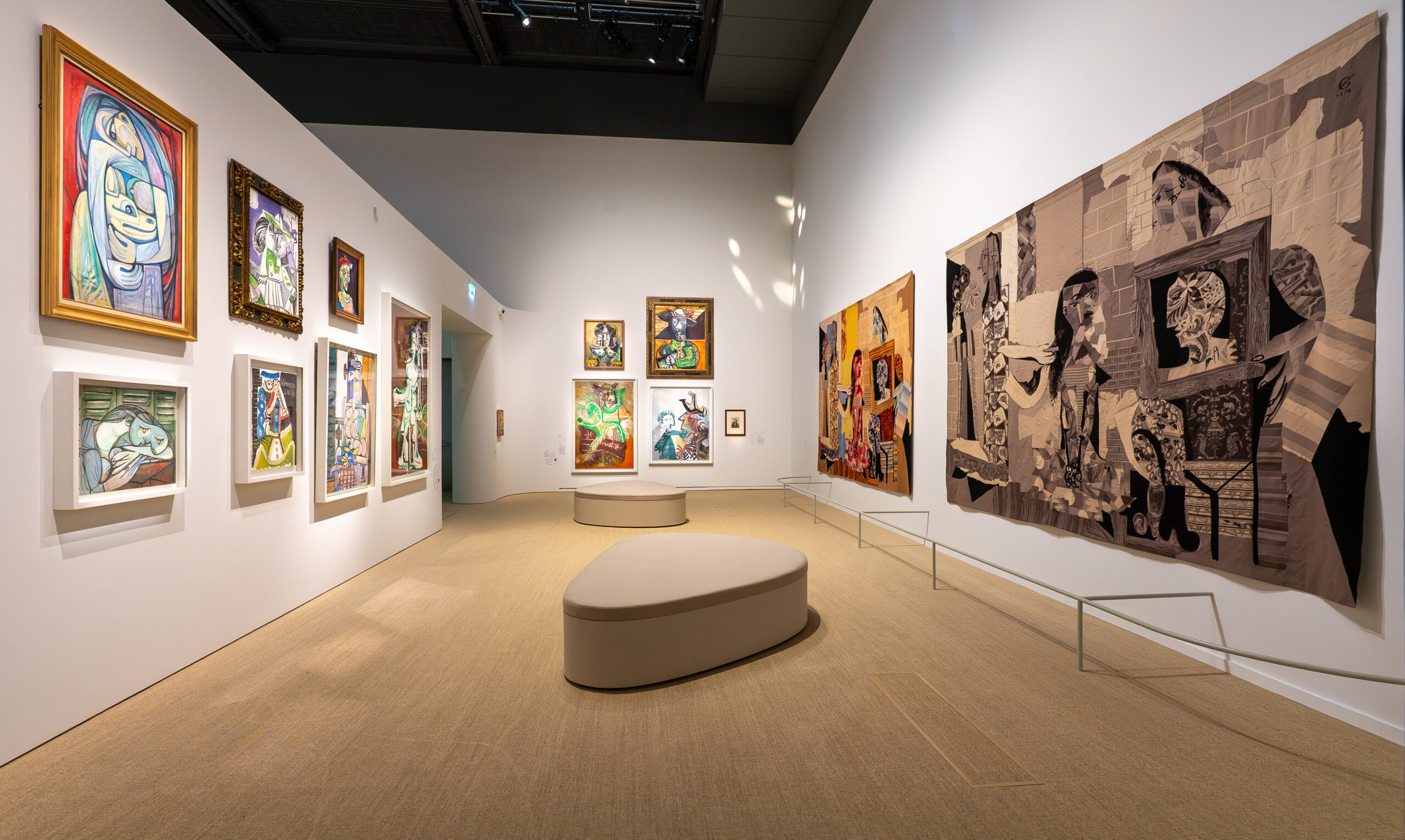
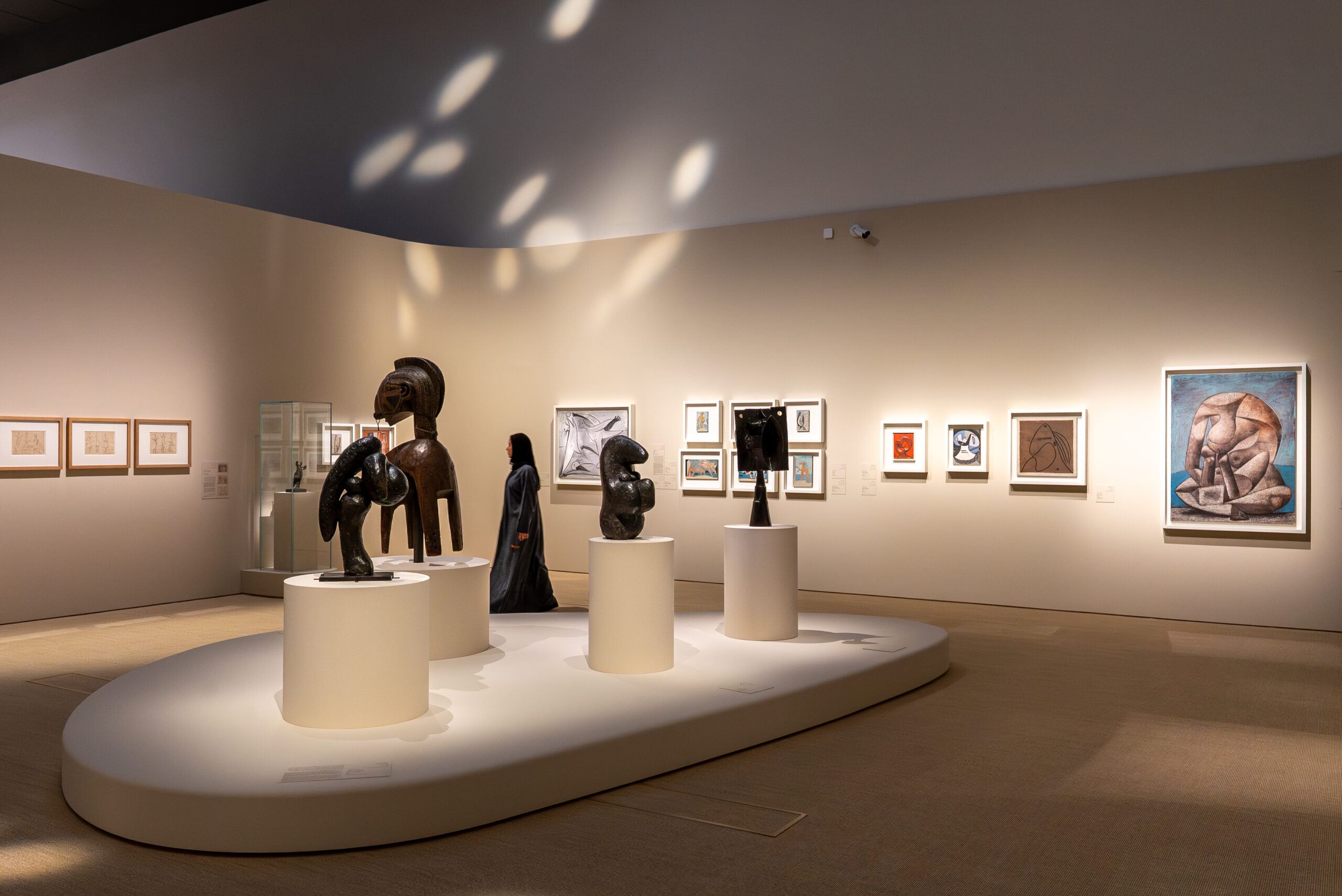
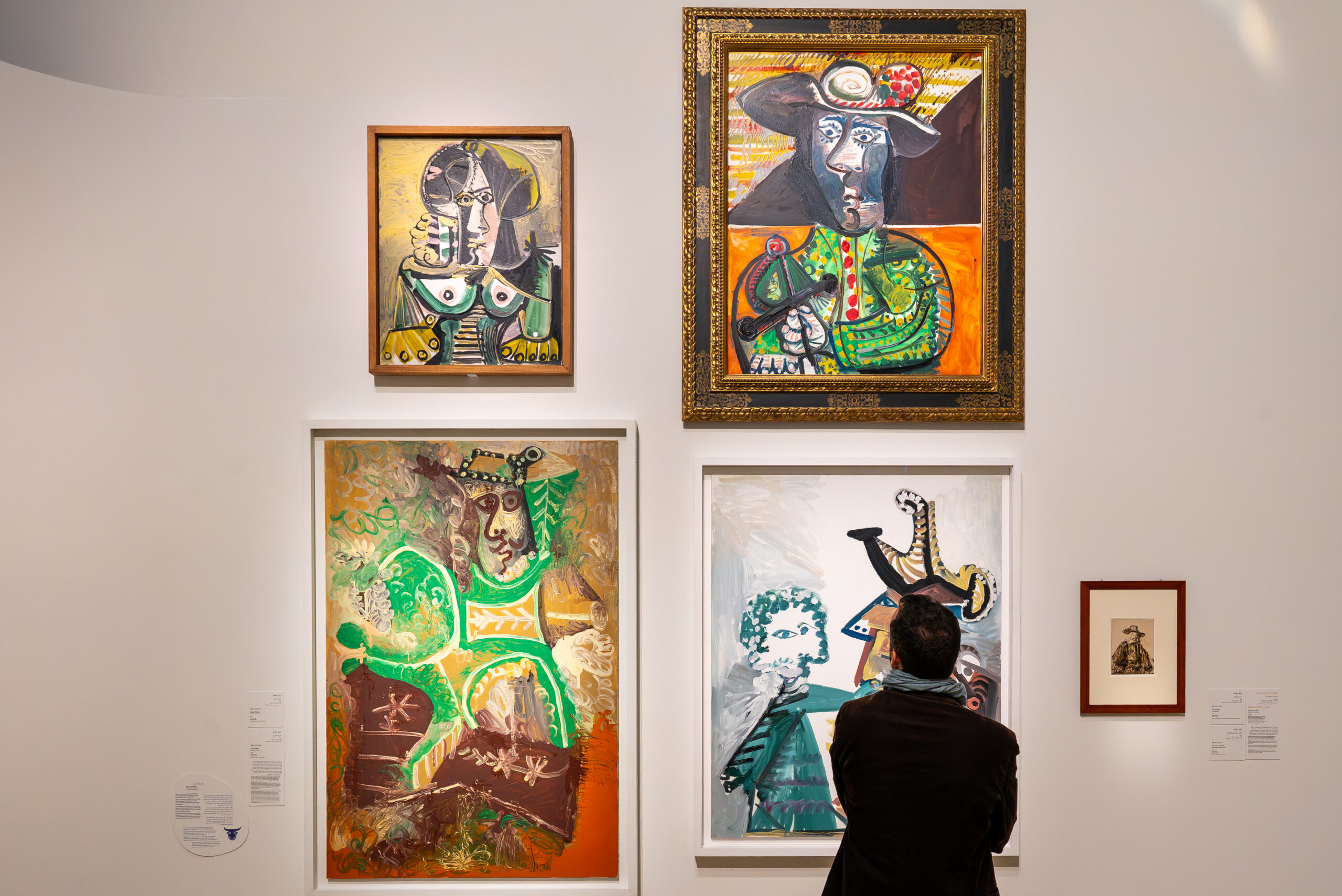
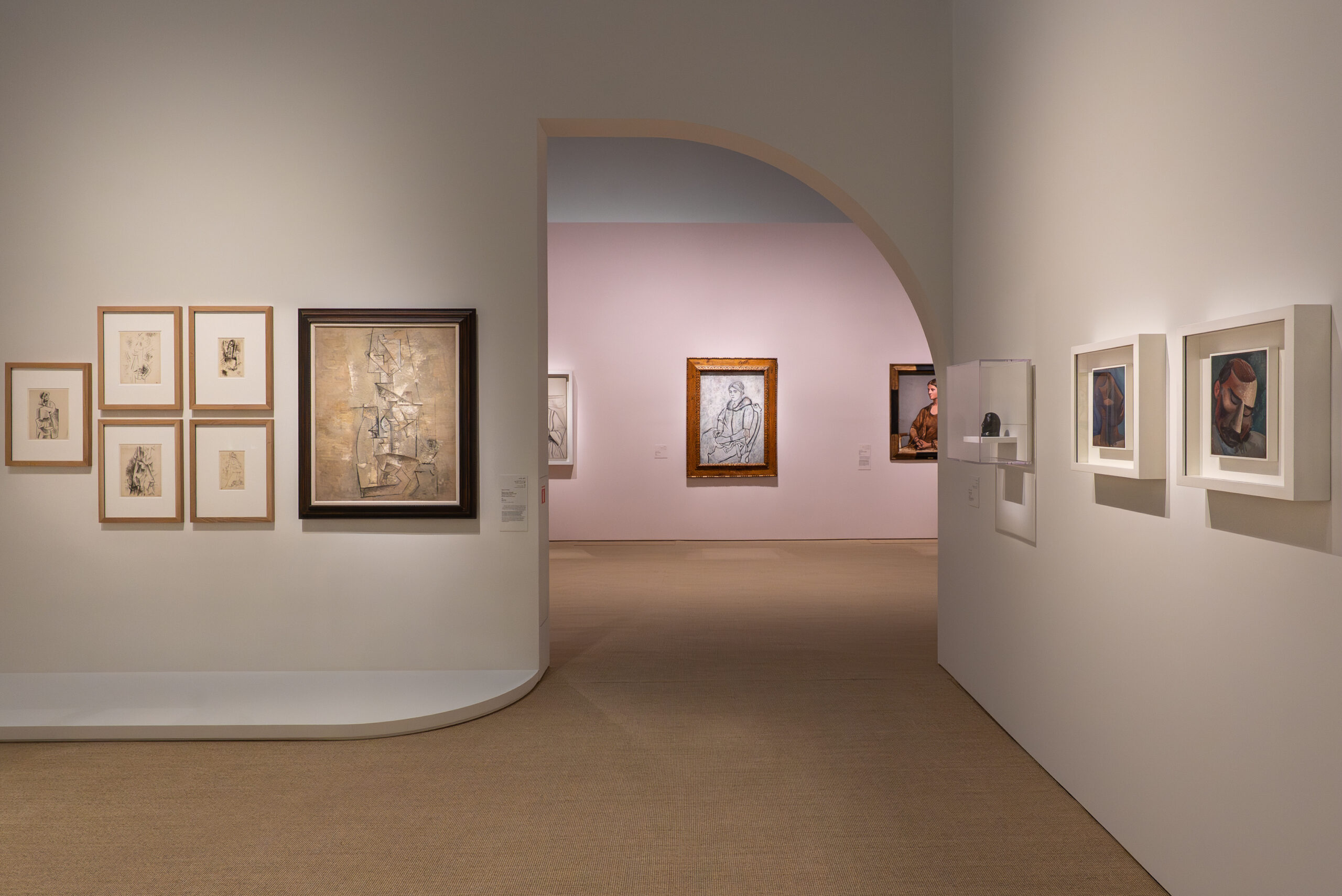
From 21 January to 31 May 2026, Louvre Abu Dhabi hosted the monographic exhibition Picasso: The Figure, co organised with the musée national Picasso–Paris and France Muséums. The show explored Picasso’s fixation with the human figure in 131 works juxtaposed with pieces by contemporary artists from the local region, highlighting the Spaniard’s enduring influence.
However, the organisation of such an international exhibition raises complex legal issues, in particular with regard to intellectual property.* How is it possible to harmonise the promotion of cultural heritage with respect for artists’ rights, the interests of rights holders, and specificities particular to the host country?
To clarify these matters, we talked to Léa Karouby (a legal adviser at France Muséums), Valentine Bellucci (project manager in the Programming and Production department at France Muséums) and Élodie de Almeida Satan (a rights manager for Picasso Administration).
Could you give a brief description of Picasso Administration?
Elodie de Almeida Satan: Picasso Administration was created in 1995 by Claude Ruiz Picasso. Its mission is to manage copyright of works by Picasso, the artist’s personality rights (the right to use the artist’s name, signature and image), and the trademarks registered by Indivision Picasso.
This legal entity of the artist’s 9 living heirs is represented by Picasso Administration under the direction of Paloma Ruiz Picasso, who also manages Indivision Picasso.
We therefore manage these rights throughout the world, though for certain territories through collective management organisation.
Léa Karouby: Thus, the Picasso Estate acts on behalf of the legally designated heirs and Picasso Administration is the company created by the heirs to authorise management of copyright, rights regarding trademarks, etc.
How does Picasso Administration work with cultural institutions in the organisation of projects that involve works by Picasso?
EAS: As soon as we learn that an exhibition involving works by Picasso is being planned – especially if it is a solo exhibition – we quickly contact the institution or organisers concerned. We explain our role and how we operate, and then send them our guidelines. This document has been drawn up over time in response to questions we receive, and details the conditions for using Picasso’s works, name and image, as well as the procedures to obtain the permissions required.
The guidelines enable the institutions to understand the legal requirements involved and to pass them on to their teams. Picasso Administration also mediates to approve the reproductions of works (ensuring the accuracy of the colouration and captions, etc.), to check that moral rights – as defined by Indivision’s administrator – are upheld, and helping the institutions to identify the resources they require for compliant use.
What role did France Muséums play in this exhibition?
Valentine Bellucci: France Muséums operates like an orchestra conductor between Louvre Abu Dhabi and the various contributors to the project, whether they are French or international (partner museum, exhibition designer, mediation company, rights holders, lenders, restorers, transporters, installers, etc.).
For Picasso, the Figure, France Muséums organised several coordination meetings very early on in the project development cycle. Picasso Administration provided educational materials and made itself available to identify important legal and operational points and to deal with any issues that the project and its specific characteristics might throw up.
What were the main legal issues that arose in relation to Picasso, the Figure?
VB: The exhibition was principally a one-man show focused on an artist who died in 1973. The rights attached to his works are thus still protected by copyright, which protects intellectual works. It is the Picasso Estate that holds the rights to the name, image and works of Pablo Picasso.
LK: The exhibition was designed for Louvre Abu Dhabi and presented in Abu Dhabi but the application of property rights (for reproduction and representation of works) differs between countries. In France property rights are valid for 70 years after a creator’s death, thus until 2044 for Picasso, whereas in the United Arab Emirates it is for 50 years, which means that Picasso’s works entered the local public domain in 2024.
It was therefore necessary to take this fact into consideration, in particular with regard to the different usages that would be made of the works: those confined to the territory of the Emirates, such as public display, the local press, and representations in the exhibition, and those that would cross the UAE borders (social networks, internet site, the exhibition catalogue, and so on) to which the stricter regime applies, the one enduring until 70 years after the artist’s death.
VB: As the exhibition was monographic, the name, image and works of Picasso were omnipresent in the exhibition design, mediation, communications, spin-offs, etc. It was thus necessary to anticipate these usages from the start of the project development.
To give structure to the collaboration, France Muséums identified Picasso Administration’s expectations (legal requirements, the respect of moral rights), listed all Louvre Abu Dhabi’s needs (communications, marketing, publishing and spin-offs), and anticipated all the different usages (works, mediation means, promotions, exhibition design, logistics) in a complex international context.
The rapidity and regularity of the exchanges with Picasso Administration were decisive for identifying key points and ensuring smooth coordination between all parties concerned.
Aside from the exhibition’s conception phase, how is copyright of Picasso’s works applied in LAD’s communications and marketing tools?
EAS: For a monographic exhibition, we prefer that communications employ either one of Picasso’s works of a photo of him in his studio. As Picasso was above all a painter, it is important that exhibition communications use one of his paintings.
Picasso Administration stipulates that at least one complete reproduction – without overprinting – of the work is seen on each promotion tool. The details of works can only be overprinted if the complete work is also reproduced (in a smaller format) together with the copyright and caption.
You are used to working with institutions in France but also elsewhere in Europe and North America. Had you ever worked previously with countries around the Gulf?
EAS: We regularly work with Louvre Abu Dhabi, which has recently purchased new works by Picasso, and in 2020 we worked with Qatar Museums on the exhibition Picasso’s Studio.
We know that these countries are not yet fully accustomed to dealing with copyright. We make a real effort to be as instructive as possible, to help them obtain the necessary authorisations, and to reply as quickly as possible to their questions.
LK: It was essential to make the on-site teams aware of the Picasso Administration procedures and, more generally, of the issues related to intellectual property.
What scope for action do you have abroad if you find that an institution is not applying the rules correctly?
EAS: We always attempt to find an amicable solution. It is rare that a cultural institution does not cooperate with us. It is often down to a poor application of the rules, revealing a lack of understanding. We try to remain a partner for institutions to allow them to display the works of Pablo Picasso respectfully and in compliance with the rules of moral rights.
Intellectual property is a fundamental aspect of the organisation of an exhibition. Consequently, it is essential that the institutions in question work with legal advisers or organisations that deal with rights-holders, in particular for an international exhibition, as copyright differs from one country to another.
From the moment it was first conceived to its post-opening promotion, the exhibition Picasso, the Figure necessitated different forms of legal expertise, for which the keys to success were organisation and anticipation, with France Muséums playing a central role in coordinating the different parties.
*Intellectual property denotes the exclusive rights granted to a creator or their rights‑holders in relation to their works, inventions or distinctive signs (trademarks, designs, etc.), allowing those rights-holders to protect and control how the creations are used and exploited. This fundamental legal principle entails constant vigilance over such elemental issues as managing copyright, the protection of works, and the promotion of cultural heritage. This is particularly true of international contexts where regulations differ between countries, and in a world where digital representations are increasingly important.
The exhibition curators were Cécile Debray, Curator and Director of the musée national Picasso-Paris, Virginie Perdrisot, Head Curator at the musée national Picasso-Paris, and Aisha Al Ahmadi, Associate Curator.
This project could not have been realized without the versatile team at France Muséums, composed of Adrien Berthelot, Director of Programming and Production; Francesca Crudo, Head of the Exhibitions Production Unit and Deputy Director of Programming and Production; Valentine Bellucci, Project Manager; Clara Bleuzen, Exhibitions Production Officer; Solène Manant, Production Officer; Ines Belchi, Visitor Experience and Mediation Project Officer; Elen Lossouarn, Senior Mediation Officer; Charlotte Clergeau, Digital Projects Officer; Isabelle Hyvernat, Head of the Registrar and Operations Unit and Deputy Director of Programming and Production; Anaïs Desneaux, Art Registrar; Lise Delpech, Art Registrar; Ophélie Guinet, Art Registrar; Zain Al‑Hindi, Head of Operations; and Léa Karouby, Legal Adviser.
The exhibition setting was designed by Atelier Jodar, the signage by Caroline Pauchant, the lighting by 8’18 (Claire-Lise Bague and Agnès Charvet), the production of the mediation devices was by V§VANT, and the production of the multimedia devices by Voxels.
We also wish to thank all the teams at Louvre Abu Dhabi and, in particular, Rajeev Gopinadh, Temporary Exhibitions and Special Projects Manager, and Alice Querin, Assistant Temporary Exhibitions Manager, for the stewardship of this exhibition.